
It's alive!!! (Now fix the arms.)
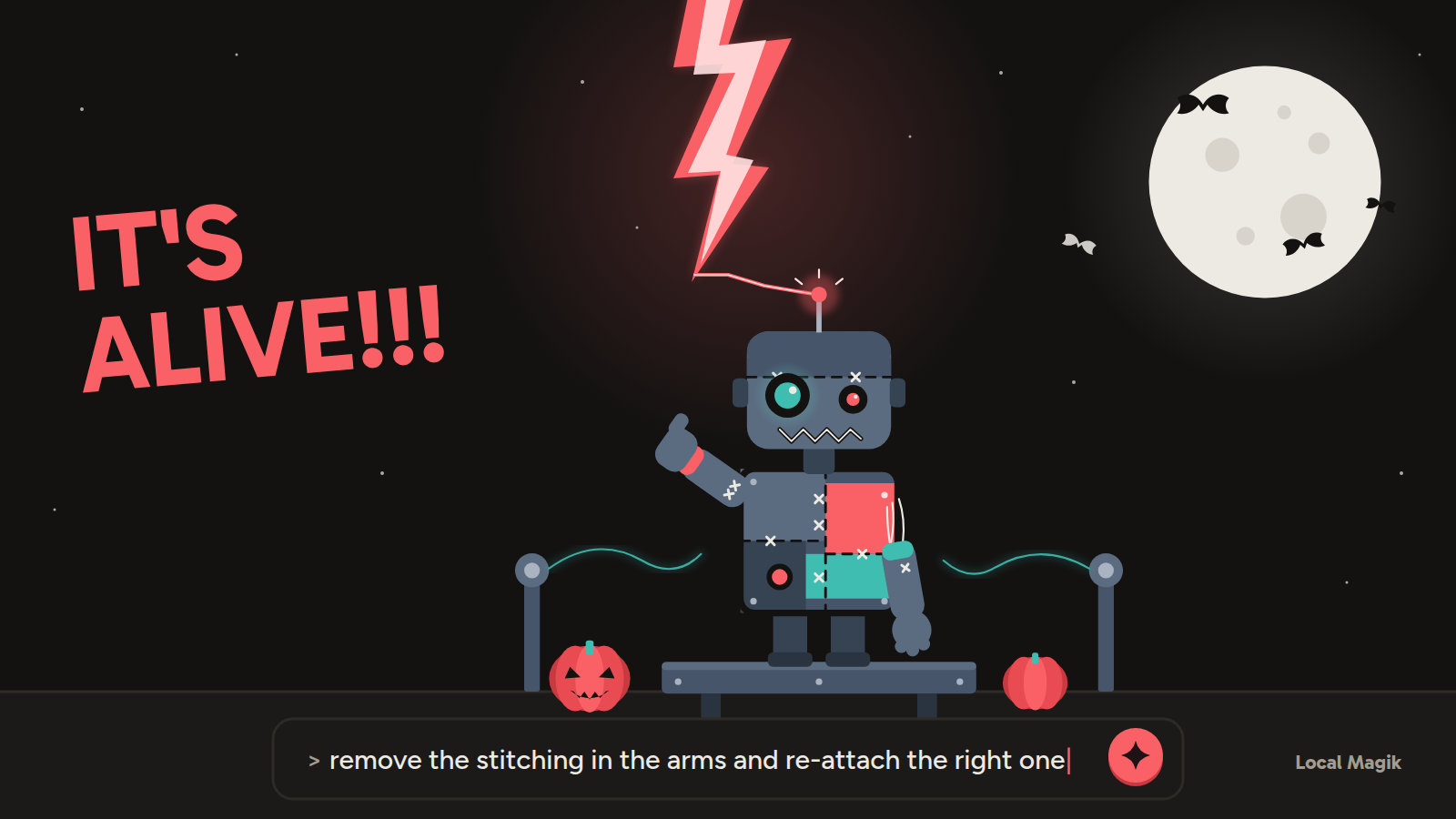
It's October, so I'm allowed to say this: being a solo founder-builder feels a lot like being Dr. Frankenstein.
Not the lightning-and-castle part. The part before that. The weeks in the lab with technology that is clearly powerful and clearly not finished, trying to get it to do one specific thing. You go to bed thinking about it. You wake up thinking about it. The coffee gets questionable.
And then one night, the thing on the table twitches.
The "it's alive" moment
If you've built anything with AI in the last couple of years, you know this moment. The first time the model takes the mess you've been feeding it and hands back something that actually works. A real answer. A real report. A real piece of a product. Hours of toil, and then all at once: it's alive.
I don't think that feeling ever fully goes away, and I hope it doesn't. It's the whole reason to do this.
Then you look closer.
It's a monster
The arms are barely attached. There's stitching everywhere. It walks, but it walks weird. It answered the question, but it also made up a column that doesn't exist. It drafted the email, but it signed it with the wrong name. It did the thing, and the thing has bolts sticking out of its neck.
This is the part nobody puts in the demo video. The first output is never the product. It's a creature that proves the idea is possible, held together with thread, and it needs a lot more work before you'd let it near a customer.
For a long time this was where the real cost of building lived. Getting from "it's alive" to "it's good" meant going back into the code, and going back into the code meant time I didn't have.
The part Mary Shelley never got to write
Here's what's different now. You can just talk to the monster.
"Remove the stitching in the arms." "Reattach the right one." "Make it stop doing that thing with its eye."
And it does. You look at the result, you find the next thing that's wrong, you say it out loud, and the monster gets a little less monstrous. Again and again, until one day you realize it stopped being a monster a while ago and you're now arguing with it about the font.
That loop is the job. Not the lightning. The lightning is one night. The job is the hundred small re-prompts after it, each one taking the thing a step closer to something a person would actually trust.
Why this matters for local businesses
I think about this a lot at Local Magik, because the people I build for aren't going to re-prompt anything. They run a catering company or a mountain bike shop. They don't want a lab. They don't even want to see the monster. They want to press a button and have the work done, and they want it done right the first time.
So the monster has to be my problem, not theirs. Every Magik Button we ship went through this exact loop: it came alive, it was ugly, and then it got re-prompted and re-tested until the stitches were gone. By the time it reaches an owner, it's just a button that does what it says.
That's the real promise of building with AI right now, and I think it's a bigger deal than the "it's alive" moment itself. The first version of anything is going to be a monster. It always was. What's new is how cheap it has become to fix.
Happy October, fellow mad scientists.